Leading New Brunswick in social research
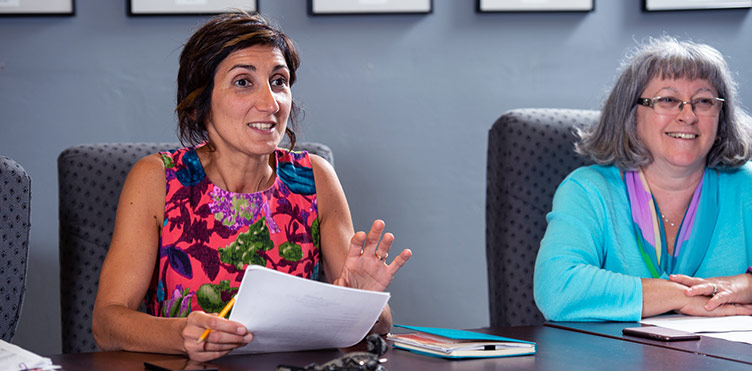
Faculty within the Department of Sociology concentrate on studying social structures, social relationships and social change. We use a wide range of qualitative and quantitative strategies to explore new avenues for productive research and teaching.
Our shared pillars of research strength include:
- family and domestic violence
- health, healthcare and health policy
- population studies
- law, criminalization and security
- feminist, gender, and sexuality studies
- critical sports studies
- social movements
- environmental governance
- climate politics
We also have affiliations with many research institutes and centres at UNB including:
- Canadian Centre for Policing Intimate Partner Violence
- Muriel McQueen Fergusson Centre for Family Violence Research
- DataNB
- New Brunswick Research Data Centre
- The 203 Centre for Gender and Sexual Diversity
- The Gregg Centre for the Study of War and Society
Each of these research areas and relationships offers rich prospects for our graduate and undergraduate students to the new opportunities of tomorrow.
Faculty research
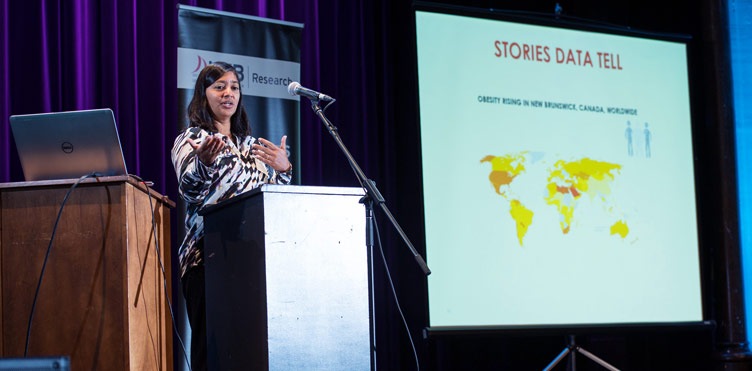
The areas of research specialization for our faculty members and research associates will give you a better sense of the range of topics on which we can most effectively supervise your research work ― be it for an undergraduate honours thesis, a master’s thesis or a doctoral dissertation.
Andrea Bombak: Qualitative health research; gender and self-perceptions of health; health services and weight stigma; critical public health policy.
Tia Dafnos: Policing, security and pacification; racialization and colonialism; resistance, protest and social movements.
Omar Faruque: Contentious politics and social movements; energy futures and just transition; environmental justice and environmental racism; politics of climate crisis; resource extraction and environmental governance.
Carmen Gill: The family; social policy; third sector studies; violence against women.
Neeru Gupta: Population health; applied quantitative health systems and policy research; epidemiology of chronic disease and injury; social determinants of health; health inequalities.
David Hofmann: Terrorism and political violence; radicalization towards violence; charismatic authority; leadership; criminal and illicit networks; right-wing extremism and political activism; cults and new religious movements; mixed methods; social network analysis.
Michael Fleming: Political economy; critical criminology; toxic masculinity; policing; corporate crime; work and employment in capitalist societies; trucking industry resilience; intersections of race, class, gender, and geography; social justice.
Catherine Holtmann: Sociology of religion; gender; immigrants; domestic/intimate partner violence; mixed methods research; visual sociology.
Nathan Kalman-Lamb: Classical and contemporary social theory; Marxisms, racial capitalism; sociology of sport; labour of sport; postcolonial/anti-racist critique of multiculturalism; social reproduction.
Jacqueline Low: Health, health care and health policy; alternative and complementary therapy; chronic illness and disability; deviance and stigma management; sociology of the body; home care and home support; qualitative research methods; symbolic interactionist theory.
Celeste E. Orr: feminist and gender studies; intersex studies; disability studies; queer studies
Luc Thériault: Social policy and third sector studies; healthcare policy; social economy organizations involved in the delivery of human services, including co-operatives.
Lucia Tramonte: Quantitative analysis; socio-economic segregation; family resources; physical and mental health; children’s outcomes; anxiety and depression; comparative education; school achievement; longitudinal data; cross-sectional data; multilevel modelling.
Research collaborations
Prospective graduate students may also have adjunct professors, honorary research associates, or faculty at the UNB Saint John campus to serve as supervisor or co-supervisors for their research-based degree programs.
Adjunct professors
- Daniel Dutton: Dalhousie Medicine (Saint John)
- Deborah Harrison: UNB Fredericton ― Feminist theory and symbolic interactionist theory; military families; qualitative research methods.
- Matthew Hayes: St. Thomas University
- Mayme Lefurgey: Gender, international development studies, peace building, gender-based violence and community-based research.
- Andrew Reddick: UNB Fredericton ― Media and communications.
Honorary research associates
- Kristi Allain: St. Thomas University ― Gender and Canadian identity
- Gulhanim Caliskan: St. Thomas University ― Global sociology
- Erin Fredericks: St. Thomas University ― Transgender
- Stephen McMullin: Acadia Divinity College ― Sociology of religion; domestic violence; social change
- Mary Milliken: Family violence and sexual violence program evaluation
- Matthew Stackhouse: UNB Fredericton - social determinants of health, family structures and lifecourse health
- Deborah van den Hoonaard: St. Thomas University