Events
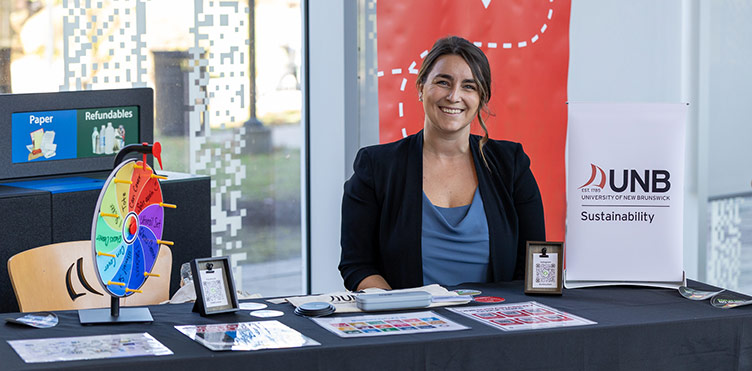
From Sustainability Month to the Residence Energy Challenge and the Sustainable Development Goals (SDG) Month, UNB Sustainability leads several major annual initiatives that bring our community together.
Throughout the year, we also collaborate with campus groups to offer a wide range of sustainability focused events. We invite everyone to get involved and be part of our community’s efforts toward a more sustainable future.
October is Sustainability Month at UNB
Week one
Friday, Oct. 2
9 a.m. - 4 p.m.Climate Change Teaching Conference hosted by UNB’s Climate Change
Working Group
Saint John: Fundy Room at Diamond Jubilee Cruise Terminal, 333 Water St.
Join virtually
Week two
Monday, Oct. 5
2:30 - 5:30 p.m.Student Life Town Hall with MLA David Coon hosted by UNBSU
UNB Fredericton: Tilley Auditorium
Tuesday, Oct. 6
10 am – 2 pm Mobility Day hosted by the UNB Community Transportation Research Lab Head Hall Atrium (FR)
Pay What You Can Market (Sustainability) hosted by UNBSU
UNB Fredericton: Sub Atrium
Wednesday, Oct. 7
10 a.m. - 1 p.m.
Free Store hosted by UNB Sustainability
UNB Fredericton: Forestry and Geology Building, room 304
10 a.m. - 2 p.m.
Mobility Day hosted by the UNB Community Transportation Research Lab
UNB Saint John:Hans Commons
Noon - 4 p.m.
DIY Snack Boxes hosted by UNBSU
UNB Fredericton: SUB Atrium
Thursday, Oct. 8
11 a.m. – 2 p.m.
Free Store hosted by UNB Sustainability
UNB Fredericton: Forestry and Geology Building, room 304
11 a.m. – 2 p.m.
Plan to Plant hosted by the UNBSU
UNB Fredericton: SUB Quad (FR)
Friday, Oct. 9
UNBSU Garden Harvest hosted by the UNBSU
UNB Fredericton: Community Gardens
Week three
Wednesday, Oct. 14
10 a.m. - 1 p.m.
Free Store hosted by UNB Sustainability
UNB Fredericton: Forestry and Geology Building, room 304
4 – 5:30 p.m.
Eco Anxiety Fireside Chat hosted by UNB Sustainability
UNB Fredericton: SUB Quad
Thursday, Oct. 15
11 a.m. - 2 p.m.
Free Store hosted by UNB Sustainability
UNB Fredericton: Forestry and Geology Building, room 304
Friday, Oct. 16
10 a.m. - 2 p.m.
Home Energy Conservation 101 hosted by UNB Energy UNB Saint John: Ganong Hall Gallery
Week four | Commuting Survey begins
Wednesday, Oct. 21
10 a.m. - 1 p.m.
Free Store hosted by UNB Sustainability
UNB Fredericton: Forestry and Geology Building, room 304
Thursday, Oct. 22
11 a.m. - 2 p.m.
Free Store hosted by UNB Sustainability
UNB Fredericton: Forestry and Geology Building, room 304
Friday, Oct. 23
10 a.m. - 2 p.m.
Free Store hosted by UNB Sustainability
UNB Saint John: Ganong Hall Gallery
Week 5 | Commuting Survey continues
Monday, Oct. 26
10 a.m. - 2 p.m.
Home Energy Conservation 101 hosted by UNB Energy
UNB Fredericton: SUB Lobby
Wednesday Oct. 28
10 a.m. - 1 p.m.
Free Store hosted by UNB Sustainability
UNB Fredericton: Forestry and Geology Building, room 304
Thursday, Oct. 29
11 a.m. - 2 p.m.
Free Store hosted by UNB Sustainability
UNB Fredericton: Forestry and Geology Building, room 304
Friday, Oct. 30
10 a.m. - 2 p.m.
Free Store hosted by UNB Sustainability
UNB Saint John: Ganong Hall Gallery
Annual initiatives
Sustainability Month (October)
Sustainability Month brings together events and activities that inspire sustainable lifestyle choices, showcase new ideas and strengthen our campus community.
By promoting well being, economic prosperity and environmental responsibility, we work toward a cleaner and more sustainable campus.
Our events support the actions of the Climate Action and Sustainability Plan, and we proudly partner with student groups, staff and faculty to highlight their sustainability focused efforts.
Sustainability Month 2025 highlights
- 1073 event participants
- The UNB Sustainability Free Store re-distributed just under 1,000 pounds of gently used clothing and small household items to students and the community.
- UNB Mobility Day returned to both the UNBSJ and UNBF campuses with in-person micromobility demos in Fredericton, various research presentations and a roundtable on transportation.
- UNB ITS and UNB Sustainability partnered again to bring the E-waste recycling event back to UNB and share Cyber Security Awareness month information with community. A total of 511 pounds of electronic waste was recycled.
- Other events lead by various student groups and partners across campus include: Community Garden clean-ups, UNBSU Sustainability week events and Harriet Irving Library Research Commons FabLab workshop.
Residence Energy Challenge (January / February)
UNB Sustainability partners with the Residence team to deliver the Residence Energy Challenge (REC), a two‑week competition that encourages residents to reduce their energy and water consumption.
Energy and water use are tracked for each residence during the two weeks leading up to the challenge to establish a baseline.
The residence on each campus that achieves the greatest percentage reduction from its baseline wins a prize.
Effective tips for reducing energy and water consumption
- Turn off the lights and use natural light: One of the easiest things to do to reduce your energy consumption is to ensure all lights – your room, the washrooms and common rooms - are turned off when they are not in use. You can reduce your energy consumption further by only using lights when needed. Most residence rooms receive a significant amount of sunlight throughout the day, so try opening your blinds and taking advantage of natural sunlight when working and hanging out in your room.
- Turn off computers and set energy-saving functions: With the vast majority of students owning personal laptops and having a lifestyle in which they use their laptops for several hours a day, the energy needed to power the laptops in our residences is tremendous. Although using your laptop is often necessary, it is also important that you shut it off and set the energy-saving functions for when it is not in use. When energy-saving functions like sleep mode are set, laptops use approximately 84% less energy. Please also note that screensavers are not an energy-saving function; they actually use about the same energy as when the laptop is in use.
- Take shorter showers: Five minutes in a standard shower can use approximately 100 litres of water and it takes a large amount of energy to heat that water. Taking shorter showers and using less hot water can dramatically reduce energy and water use.
- Do your laundry using cold water: Most of the energy consumed by laundry machines is put into heating the water, so doing your laundry with cold water saves a lot of energy.
- Wash full loads of laundry: Running several small loads uses far more water and energy than waiting for a full load. Combining laundry into full loads helps reduce both energy use and water waste.
- Turn off taps when not in use: Leaving the tap running while brushing your teeth, washing your face or doing other daily routines wastes a significant amount of water. Turning the tap off between uses is a simple way to reduce water consumption.
- Use a drying rack instead of the dryer: A dryer consumes anywhere from 4 to 6 kWh of electricity, while using a clothesline or drying rack uses no electricity.
- Use small appliances less often: Small appliances like kettles and hairdryers are very energy-intensive, so try to use them less often when you can.
- Unplug your mini-fridge (as applicable): A mini-fridge can account for over half the energy usage in the average residence room. Therefore, one of the most significant contributions you can make to reduce your energy consumption is to unplug your mini-fridge when you aren't using it, such as on weekends or over reading week if you're heading home and won't be on campus. You could also consider teaming up with your neighbours and sharing a fridge.
- Talk: Starting a conversation can lead to creative and practical ideas for reducing energy and water consumption together. Working as a group often makes these changes easier and more enjoyable to put into practice.
Code of conduct
- Do not tamper with motion detectors or other fixed building equipment.
- Do not do anything that will impact campus infrastructure or agreements.
- Do not remove any fluorescent tubes in hallway lighting.
- If you are found sabotaging others’ efforts, your residence will be disqualified.
- Remember your residence code of conduct and rules while participating in the challenge.
This code of conduct is to make the challenge fun while ensuring that safety standards and fair play are maintained.
SDG Month (March)
Sustainable Development Goals Month Canada(formerly SDG Week Canada) is a national collaborative initiative that invites universities and colleges across the country to host workshops, panels and interactive programming that build awareness and engagement with the United Nations’ 17 Sustainable Development Goals (SDGs).
SDG Month Canada is led by the Sustainability Hub at UBC, SDSN Canada and Colleges and Institutes Canada.
UNB Sustainability hosts a month long series of events on both of our campuses designed to deepen understanding of the SDGs and highlight their relevance on and off campus.
Each event aligns with the actions of the Climate Action and Sustainability Plan, while supporting students, faculty and staff in advancing sustainability related initiatives and activities.
SDG Month 2026 Highlights
- Activities collectively advanced progress toward all 17 Sustainable Development Goals.
- Collaborations with the Capital Region Solid Waste Commission, Girls STEM Up and other institutions expanded outreach and visibility.
- Interactive displays and whiteboard prompts encouraged ongoing student input on sustainability, accessibility and campus improvements.
- Hands‑on learning opportunities such as the Fun with Solar Power Workshop and the Fredericton Landfill Tour deepened understanding of renewable energy, waste systems and sustainability practices.
- UNB Libraries curated SDG‑themed book displays across four library locations increasing sustainability literacy.
- Initiatives supported key focus areas in the Campus Sustainability Plan (engagement, operations) and Climate Change Action Plan (education, programs, waste).
Make your events more sustainable
Communication and promotion
- Promote your event as digitally as possible (avoid printing tickets, posters and other materials that could be digital).
Transportation and energy
- Encourage attendees to take active or public transportation to your event or to carpool.
- Adjust or lower the lighting at the venue and utilize natural light when possible.
Food
- If you will be ordering food for your event, consider ordering vegan, vegetarian and / or local food.
Waste management
- Locate and encourage the use of the recycling bins at your venue.
- Request reusable dishes and cutlery. If your event is on campus and being catered by Chartwells, you can request their china service (and undergraduate students on the Fredericton campus can use the Student Sustainability Fund to help pay for this service).
- Request pitchers of beverages instead of individual bottles or cans, and request that any condiments and spices be provided in bulk dispensers rather than in individual packets.
- If you will be providing guest speakers or attendees with prizes or gifts, consider getting them something practical and reuseable from a small or local business.
- Encourage attendees to bring their own reusable mug or dishes to your event when appropriate.
Partners and sponsors
- Seek local vendors or service providers as partners and sponsors for events. It is even better if these partners and sponsors are sustainability minded.
Reduce barriers to participation
- Deliver a land acknowledgment, and make sure that event participants are aware of the land that you are gathered on.
- Consider the diversity of your planning committee, and what voices might be missing from your event.
- Have an accessibility accommodations request form or question built-in to event registration.
- If your event has an entry fee, implement a sliding scale or “pay what you can” system that considers the diverse economic positions of potential participants.
Contact us: sustain@unb.ca
Follow us: Instagram | Facebook