Support your local food systems
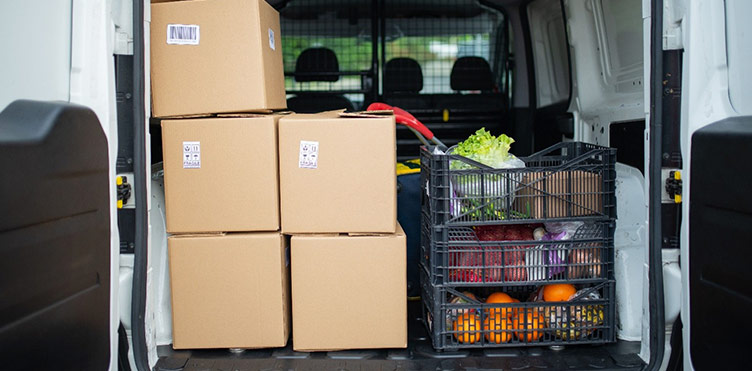
While the province works to increase local food production, New Brunswick continues to rely heavily on imported food. Due to the limited land dedicated for agricultural use, imported products account for nearly 90% of the provinces’ food supply.
Food distribution holds as much importance as the production and processing methods in creating a sustainable food system. Maintaining food safety and quality requires transportation and storage conditions appropriate for the type of product and for the distance travelled.
With the province’s food supply chain heavily reliant on imported goods, transportation plays a critical role. Trucking is the primary mode for food transportation across North America and while an efficient means of moving goods, it is a contributor to greenhouse gas (GHG) emissions.
Supporting local farmers and reducing food miles are key components of creating a sustainable food system in New Brunswick. Food miles refer to the distance food travels from where it is produced to where it is consumed.
Generally, greater food miles are associated with increased environmental impacts due to the fossil fuels required for transportation, refrigeration, and packaging.
While food miles provide a simplified measure of food sustainability, they can help encourage and guide one’s choices to purchasing locally produced foods whenever possible.
Even in a province where the majority of food is imported, we can still make meaningful contributions to sustainability through small, informed purchasing decisions.
By supporting local farmers and choosing food produced within New Brunswick and the Maritimes, we can enjoy a range of benefits that extend beyond environmental sustainability, including strengthening local economy, improving regional food security, and supporting rural communities.
Farms and farmers’ markets
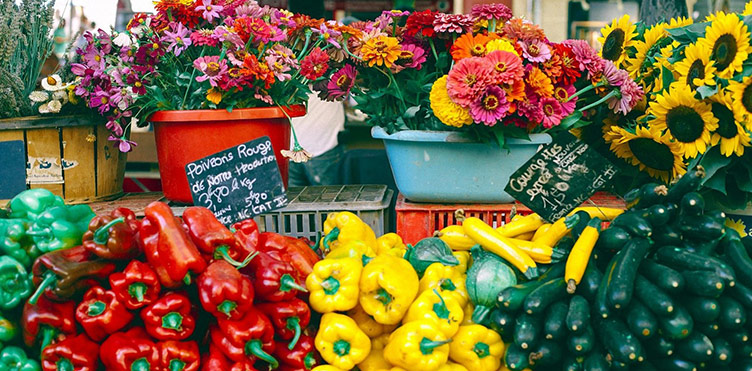
Farms and farmers’ markets offer a direct producer to consumer relationship, supporting small to medium-scale farmers while providing communities with access to fresh, affordable food.
Beyond strengthening local economies, farmers’ markets serve as community gathering spaces, encouraging and supporting local food systems.
Farms and farmers’ markets also help address food deserts, areas with limited access to affordable, nutritious food, by increasing the availability of fresh food options, particularly in underserved communities.
NB Farmers Markets Map | National Farmers Union New Brunswick
Community supported agriculture
Community Supported Agriculture (CSA) programs are a meaningful, transformative approach aimed to connect farmers and consumers, reduce food miles and support local economy.
By subscribing to a CSA, consumers provide farmers with upfront capital, which helps them manage the financial risks associated with farming.
In return, consumers receive a steady supply of fresh, in-season produce. Investing in and being a part of a CSA supports sustainable farming practices and strengthens the bond between farmers and the community.
CSA Programs in NB | Food For All NB
Watch the video or read the video transcript. You can turn on video subtitles using the [CC] button in the bottom right corner of the video or open the video transcript.
Prefer text?
Read the transcript
In a few weeks when the ground thaws and spring settles in, farms not far from here will start pulling food out of the ground. Vegetables that were seeds just a few months before.
Greens still cool from the morning air. And most of that food won’t end up at a grocery store, it’ll go straight to the people who signed up for it.
That’s what community supported agriculture is, CSA for short. The idea is simple. A local farm offers a limited number of shares each season.
People sign up, and every week they get a box of whatever what just harvested. Asparagus in the spring, tomatoes and peaches in the summer, squash and root vegetables when fall rolls in.
There’s no warehouse, no cross-country shipping, just a short trip from the field to someone’s kitchen. The food is fresher.
The farmer gets supported directly, and the people eating it know exactly where it came from. It’s not new. CSA has been around for decades, but more and more people are finding their way to it.
And it usually starts the same way, with curiosity about where their food actually comes from.
Growing and accessing local food
Community gardens
Community gardens, where residents can rent a plot within a shared space to grow and harvest their own food, promotes community resiliency, self-sufficiency, and knowledge sharing.
These local initiatives enhance food security, strengthen social connections, support mental well-being, reduce food miles, and overall contribute to the environmental and economic sustainability of local food systems.
“This self-sustainability is gratifying, builds confidence and reinforces a connection to food not found in grocery stores.” – Greener Village on the importance of community gardens.
Grocery stores
Large supermarkets such as Sobeys, Atlantic Superstore, and No Frills, alongside smaller, independent grocery stores, offer a diverse selection of both local and imported foods.
Providing access to local and imported goods offers consumers the ability to eat food locally grown in their area and have access to out-of-season produce and international products.
While grocery stores expand market access by having multiple locations over various distances, long distance transportation and the preservation methods to maintain quality are needed and increase both the food miles and GHG.
By choosing items made, produced, and packaged in Canada we can reduce our food miles.
How to identify Canadian food. Government of Canada
Watch the video or read the video transcript. You can turn on video subtitles using the [CC] button in the bottom right corner of the video or open the video transcript.
Prefer text?
Read the transcript
You want to choose Canadian, but how do you know if it's a Canadian food product?
Look at the label. If you see product of Canada or made in Canada, that's a good start. Let's break down what the labels mean so you know what you're bringing home.
Product of Canada means it's all or almost all Canadian ingredients. and it's prepared in Canada. Made in Canada means the food product was last significantly changed here in Canada.
For example, the processing of cheese, dough, sauce, and other ingredients to create a pizza. The ingredients could be imported or they could include a mix of Canadian and imported ones.
When food has a product of Canada or made in Canada label, it must comply with Canadian food labeling rules. These regulations are enforced by the Canadian Food Inspection Agency and apply to all food sold in Canada.
When you buy foods with these labels, you're supporting Canadian food processors. If you see labels like these on food, it doesn't mean that it comes from Canada.
These labels show that the product meets specific criteria or tell you how it was produced. When the Canada organic logo is used on an imported food, the label will also say it is imported.
So, if you want to choose Canadian, check food labels to spot homegrown products and support Canadian farmers and food processors.
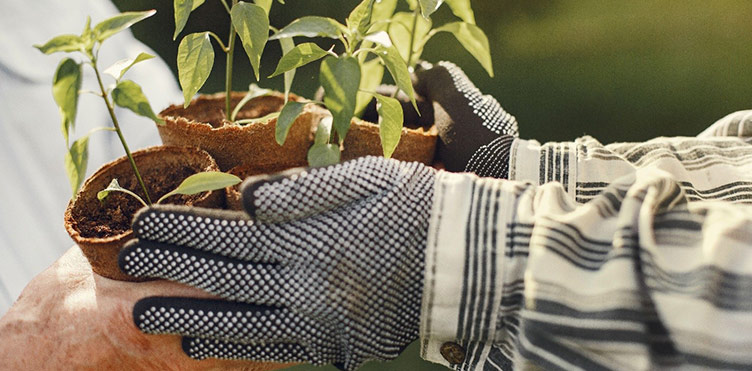
Supporting New Brunswick’s food systems through farmers markets, CSA’s, community gardens and the like, all contribute towards a strong, resilient and sustainable province.
Through local initiatives to support the goods produced and sold within the province, we can help contribute to the overall economic, environmental and social well-being of New Brunswick.
Purchasing food from local farmers boosts the regional economy by circulating money within the community. This economic circulation helps to strengthen the agricultural sector in New Brunswick, making it more resilient against economic challenges and global market fluctuations.
Moreover, local farmers often reinvest in their communities, contributing to local development and sustainability.
By purchasing locally, consumers can significantly reduce their carbon footprint. Since food transportation relies heavily on fossil fuels, reducing food miles has a direct impact on lowering greenhouse gas emissions.
Additionally, local farming practices in New Brunswick tend to be more sustainable, as small-scale farmers often use environmentally friendly techniques that preserve soil health and biodiversity.
Food sovereignty for Indigenous Peoples
From the Nyéléni Declaration, Forum for Food Sovereignty, food sovereignty is defined as the “right of peoples to healthy and culturally appropriate food produced through ecologically sound and sustainable methods, and their right to define their own food and agriculture systems.”
Indigenous food sovereignty requires a specific policy and governance approach to address the underlying issues impacting Indigenous Peoples’ food security and sovereignty.
Learn more about Indigenous food sovereignty.
Watch the video or read the video transcript. You can turn on video subtitles using the [CC] button in the bottom right corner of the video or open the video transcript.
Prefer text?
Read the transcript
What is food sovereignty? That is a really big question. When we look at lands, especially across British Columbia, all of them were purposefully shaped since time immemorial for foods, medicines, technologies, and so when we look at lands today, we’re seeing a legacy state of that time until it was disrupted by colonialism.
Food sovereignty is the reclamation and revitalization of our food systems and being able to access those foods and medicines again, find new ones as we face a changing climate, It’s really about cultural resurgence.
I think all of us are facing challenges in terms of food security. We don’t want to take or steal Indigenous knowledges, but there are models there that can help lead other communities in how we can integrate and improve our relationships with land, so that we can diversify our food system.
One really important project that I’m working on is actually in wildfire recovery with Nations that faced the wildfires after the heat dome in June of 2021. Very high severity burns occurred in St’át’imc and Nlaka’pamux territories. Our research term is working alongside communities to understand what the impacts to our culturally important plants are.
If you think of land as just vegetation and sort of an aesthetic notion of what belongs, you’re going to have very different approaches and different outcomes than if you see that land as a food system not just for humans, but for our animal relations, our bird relations, our fish relations, our relations.
You’re going to work with a greater specificity of place, and very deep knowledges to steer that and so we’re working alongside communities to develop those Indigenized processes around wildfire recovery that honour our food systems and sustainability and resiliency as we face a changing climate.
I think one of the greatest challenges that we face right now is the vulnerability of Indigenous knowledge to the interest in our knowledges at this point in history, in recognition that they do have something very valuable to offer.
How do we respectfully bring those knowledges together like western science and Indigenous knowledges that we’re not comprising either one of those, but we’re honouring both of them?
Land-based learning is one of these opportunities to get students out in the land, being able to learn and pick up on the different relationships that you would never get in a classroom setting gives us that opportunity while they’re learning to then be taking those steps to give back.
My wish is for people to know the history of the lands that they live on. So that they can understand what the food systems were, what they are, and what they could be. Learn the plants of those lands and find a way to invite them into your life.
Find a way to learn how to take care of them, and nurture them and steward them and I think that is a very important piece of reconciliation. And also a very significant and important and underestimated piece of achieving food security.
References
Learn more
- Forum for food sovereignty report. 2007, Nyéléni.
- We support the future of agriculture in NB. Feb. 10, 2026, Research NB.
- The environmental impact of food transportation: Eating locally and seasonally. 2024, Sustainable Agriculture Network.
- Food miles to assess sustainability: A revision. 2013, Van Passel, S. Sustainable Development, 21(1), 1–17.

This work is licensed under a Creative Commons Attribution-NonCommercial 4.0 International License.