Farming practices in New Brunswick
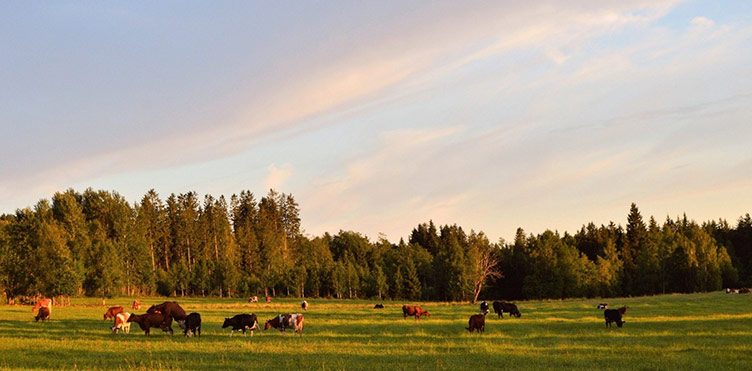
New Brunswick encompasses over 7,344,000 hectares (ha), of which only 5% is considered farmland and approximately 2% of that is utilized for crop production. While New Brunswick’s landmass is predominantly forested, the agriculture sector plays a significant role in New Brunswick’s economy.
While this module focuses on agricultural practices, it is worth noting the aquaculture and fisheries sectors also make up a large component of New Brunswick’s economy and social welfare.
The crop sector in New Brunswick is both economically driven and diverse, with the production of over twenty different agricultural commodities. Key crops for the province include potato, wild blueberry, apple, cranberries and field crops such as barley, wheat, oats and forages.
The livestock sector comprises dairy and beef cattle, poultry, swine, sheep, goats and fur, bringing in approximately $224 million into New Brunswick’s economy.
An essential component of the social and economic framework for the province comes from the commercial fisheries sector. New Brunswick is one of the largest exporters of fish and seafood products in Canada, namely lobster, crab and salmon.
Multiple farming practices exist in New Brunswick, from conventional farming to organic, small-scale farming, and the agricultural sector in this province strives to provide a sustainable approach to crop and livestock production.
Understanding how our food is grown and transported provides us with the ability to make informative decisions and recognize the role we have in sustainable food systems.
Types of farming practices
Conventional farming
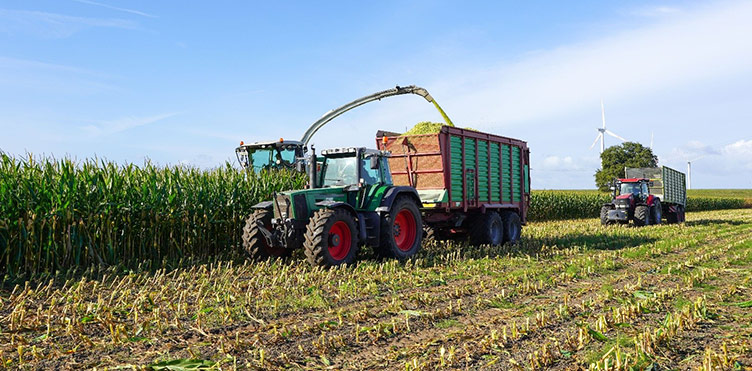
While conventional farming has evolved over the years, the primary objective remains in maximizing production of crop and livestock.
A widely practiced farming system in New Brunswick, conventional farming offers increased productivity, mechanization of daily tasks, high-yield crops, and efficient pest control through use of herbicides and fertilizers.
Through effective land management and resource utilization practices, maximizing yield is essential for ensuring food security while optimizing farming operations.
A common farming method, agricultural intensification utilizes agricultural land that already exists. By intensifying the practices through agrochemicals, like fertilizers and pesticides, alongside irrigation techniques and mechanization, farmers are able to increase yield production.
While farming practices such as agricultural intensification were developed to meet the growing demands for food, feed, and fuel, they often have a harsh impact on the land and on resource consumption.
Concerns include disruption to hydrological cycles, biodiversity loss, altered nitrogen and carbon cycles, water and soil degradation, and extensive pollution.
So, while conventional agriculture is focused on meeting the changing needs of the world, it is problematic if these farming practices are unable to meet economic and environmental sustainability standards.
Organic farming
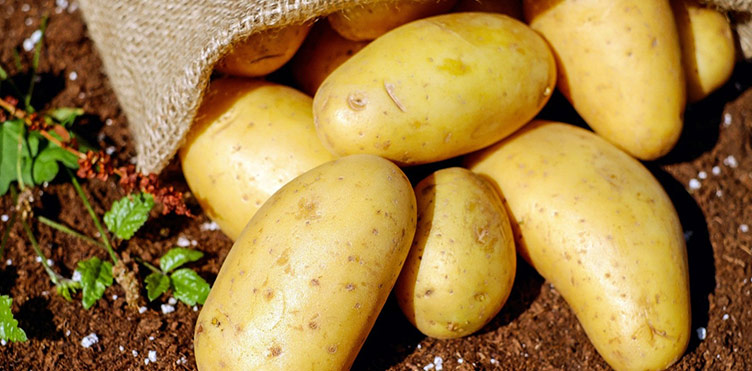
Often referred to as an alternative farming system, organic farming’s primary goal is to promote and enhance agroecosystem health which includes biodiversity, plant and organism biological cycles, and soil biological activity.
Where conventional farming utilizes synthetic chemical pesticides and fertilizers, organic farming uses an integrated approach without the use of chemical pesticides.
Examples include, utilizing a plant’s biological cycle, crop rotations, cover crops for soil fertility, timing of agriculture practices, biological control and natural pesticides for pest control.
While organic farming meets environmental sustainability needs, there is a concern with the ability for organic farming to meet the large-scale demands required to feed a growing population. On average, yield from organic farms in comparison to conventional are about18.4% lower.
As well, without the use of synthetic pesticides, this farming practice may be unable to handle the rapidly multiplying and dispersing pests within a large-scale farming operation as conventional farming is able to.
Obtaining organic certification in Canada is an intensive process held by the Canadian Organic Standards whereby certification is mandatory to produce and sell products with an organic label.
While certified organic food offers both farmers and consumers assurance and recognition in the way their food was produced, it comes with a higher cost. Food security includes affordability of food and food products.
As the cost of organic food is on average, 20 – 60 % higher than that of non-organic food, this option is not economically accessible to everyone and creates a barrier for those already experiencing food insecurity.
Learn more
Controlled environment agriculture
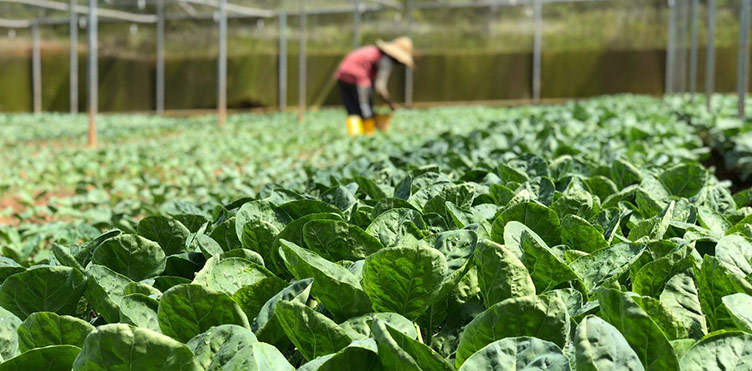
Controlled Environment Agriculture (CEA), such as greenhouses, involve infrastructure and technology to create optimal indoor growing conditions for fruit and vegetable production.
These indoor growing facilities provide the province with an extended growing season, aiding in local produce for New Brunswick. CEA includes organic growing practices and those which utilize synthetic pesticides.
The Atlantic provinces account for 7.4% of greenhouse vegetable operations within Canada.
Learn more
Watch the video or read the video transcript. You can turn on video subtitles using the [CC] button in the bottom right corner of the video or open the video transcript.
Prefer text?
Read the transcript
So, we are a multi-generation farm. My parents farmed here, my grandparents farmed here, and we go back multiple generations. My name is Jon Howe, and we are at Sunden Farms. We are located in the town of Lower Coverdale, just south of Moncton, New Brunswick.
Originally, this was a fruit farm, an apple farm. It became a potato farm, then it became a dairy farm, and now it’s back to being a vegetable farm. But not just a vegetable farm. We are actually a controlled environmental agriculture farm, where we grow produce inside year-round without pesticides or herbicides, and we do it in an environmentally sustainable manner.
Our produce is grown using only 3% of the water that is used in traditional agriculture. We don’t have to use pesticides or herbicides, and we really control and manipulate the environment in that our crops are grown in.
Which allows us to provide an outstanding crop year-round, regardless of what’s going on outdoors, regardless of what’s going on with the climate. We can grow sustainable food inside that’s highly nutritious and readily available within our community.
I’ve got quite a diverse background. I grew up on a dairy farm here, then I went to agriculture college for a year and then I went to the University of Saint John for five years. After that, I joined the army, and then I came back and decided to retire on the family farm.
So instead of doing dairy, I thought, “Let’s do something different.” The more we explored different growing techniques, the more we were able to develop our own unique techniques for growing vegetables indoors.
One of the things I love doing is playing with different plants, manipulating them, and trying to determine new growing techniques. That’s something I really have a passion for. The more I do it, the more I love it, and it’s become more of a hobby than anything else for me.
We are constantly expanding our knowledge. Not only do we grow fresh produce year-round, but we actually conduct research so that we can expand our opportunities for both us and other people.
We’ve partnered with two different companies. One of the key factors we’ve been looking at is wavelength and light with our plants. When you buy a generic LED grow light on the market, it’s not suited for any particular crop.
What we’ve done is we've actually modified those wavelengths so we can actually provide the correct wavelength to our plants while reducing our energy consumption that we have. We’ve got it down to about 10 watts per square foot, which is phenomenal. One of the things we really looked at was the economy within New Brunswick.
Over 90% of the vegetables in our province are imported within our province right now and there are two huge issues with that. One is that the nutritional value of those imports just isn’t there. When you have long supply routes like that, the nutritional value of those vegetables actually degrades. For instance, vitamin C content in romaine lettuce can degrade over 90%.
So, for us, what we really strive to do is get the produce from harvest to dinner table —or harvest to shelf— we want that timeline to be less than 24 hours, so you get that nutritional value for your family and so you get that value for your money.
The other reason we look at imports and replacing those imports is because when you buy something imported, about 90% of that money leaves this province and never comes back again.
So, when you buy produce from farmers here in New Brunswick, what happens is your money stays within the local communities. So, buy local, and buy local for good, because that good is returned right back to your families and right back into your local communities.
Buy local for good—it’s twofold for me. One is, buying local is obviously good for the community, in reinvests in your community, but it also means you should buy local forever.
Movement towards sustainable agriculture
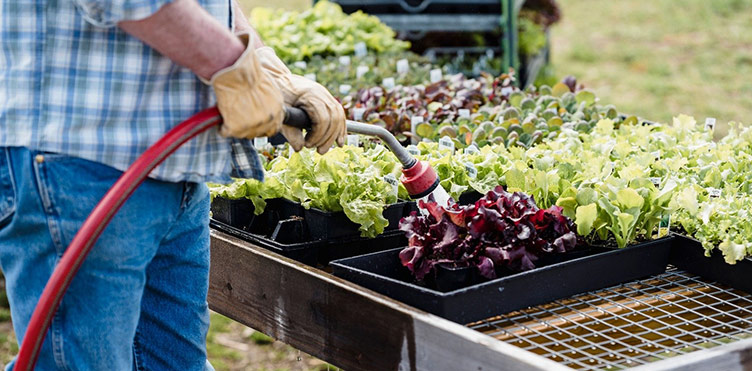
As demands for farming practices change, due to population growth and climate change, farmers are adopting practices to improve the sustainability of their operations.
Successful management of agricultural resources fulfills the demands of humans while ensuring environmental quality and conservation of natural resources for future generations is met.
Conventional farming systems can implement practices that are environmentally conscious, such as reduced tillage or no-till cultivation, precision nutrient management, cover cropping and the use of renewable energy sources.
While organic farming is often recognized for its environmental benefits, challenges related to yield and scalability limit its ability to meet the growing global food demands. Integrating beneficial practices from both conventional and organic systems can balance environmental stewardship with economic productivity and food security objectives.
Conservation agriculture further supports sustainable farming practices through minimal soil disturbance, permanent soil cover, and diversified crop rotations. Ultimately, transition towards sustainable agriculture is not specific to one type of farming.
Rather, it is a collective effort across the agricultural sector in New Brunswick to implement practices that improve environmental systems, support economic viability, and strengthen the long-term sustainability of food production.
All types of farming practices have the potential to contribute to a more sustainable agricultural sector when keeping these objectives in mind.
References
Learn more
- Statistical Overview of the Canadian Greenhouse Vegetable and Mushroom Industry. 2024, Agriculture and Agri-Food Canada.
- Yield gap between organic and conventional farming systems across climate types and sub-types: A meta-analysis. 2023, de la Cruz, V. Y., Tantriani, Cheng, W., & Tawaraya, K. Agricultural Systems, 211, 103732.
- Organically Produced Foods. Joint FAO/WHO Codex Alimentarius Commission, Food and Agriculture Organization of the United Nations - Google Books
- Conventional agriculture. 2017, Fisher, M. R. Environmental Biology.
- Canada’s fish and Seafood Trade in 2023: Overview. Fisheries and Oceans Canada, Government of Canada.
- Solutions for a cultivated planet. Foley, J. A., Ramankutty, N., Brauman, K. A., Cassidy, E. S., Gerber, J. S., Johnston, M., Mueller, N. D., O’Connell, C., Ray, D. K., West, P. C., Balzer, C., Bennett, E. M., Carpenter, S. R., Hill, J., Monfreda, C., Polasky, S., Rockström, J., Sheehan, J., Siebert, S., … Zaks, D. P. (2011). Nature, 478(7369), 337–342.
- Environmental impact of different agricultural management practices: Conventional vs. Organic Agriculture. 2011, Gomiero, T., Pimentel, D., & Paoletti, M. G. Critical Reviews in Plant Sciences, 30(1–2), 95–124.
- Land and environment. June 6, 2023, Agriculture and Fisheries, Government of New Brunswick.
- Livestock. 2024, Aquaculture and Fisheries, Government of New Brunswick.
- Crops. 2025, Aquaculture and Fisheries, Government of New Brunswick.
- Data on retail price differential between organic and conventional foods. 2019, Islam, S., & Colonescu, C.Data in Brief, 27, 104641.
- Current approaches neglect possible agricultural cutback under large-scale organic farming. A comment to Ponisio et al. 2016, Leifeld, J. Proceedings of the Royal Society B: Biological Sciences, 283(1824), 20151623.
- Environmental impact of Organic Agriculture. 2016, Lorenz, K., & Lal, R. Advances in Agronomy, 99–152.
- Efficient soil microorganisms: A new dimension for sustainable agriculture and environmental development. 2011, Singh, J. S., Pandey, V. C., & Singh, D. P. Agriculture, Ecosystems & Environment, 140(3–4), 339–353.
- How much pricier are organic groceries?. Jan 7, 2018, The Canadian Press, Canadian Grocer.

This work is licensed under a Creative Commons Attribution-NonCommercial 4.0 International License.