Amateur Radio
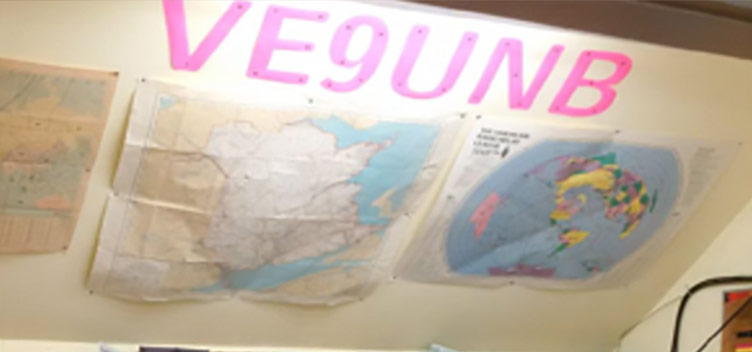
Amateur radio refers to the use of regulated radio frequency bands by amateur radio operators and has a variety of facets throughout the world. In Canada, it is regulated by the federal government through Innovation, Science and Economic Development Canada, Amateur Radio Service.
The Radio Amateurs of Canada (RAC), Canada's national amateur radio society provides services to the amateur radio operators who become its members.
In the province of New Brunswick, amateur radio is of interest to the New Brunswick Emergency Measures Organization (NB EMO) who make possible the International Repeater Group (IRG), a network of linked amateur radio repeaters, which use very high frequency (VHF) radio frequency bands.
At the University of New Brunswick (UNB) access to these bands has benefits for teaching and research, such as CubeSat NB, Collaboration Based Robotics and Automation (COBRA), wireless communications, sensors, microwave theory and insect tracking.
The station possesses four call signs;
- VE9UNB is the primary call sign
- VE9YFC is being used for a repeater
- VE9CNB is for CubeSat NB ground station
- VE9VLT is for CubeSat VIOLET
Equipment
For HF, the station has a Kenwood TS-450S connected to a Barker and Williamson BWD 1.8-30 broadband folded dipole antenna and for VHF an Icom IC-271A is connected to a Sinclair SG201 antenna.
For digital modes, a SignaLink USB is used and also a Baofeng BF-F8 VHF handheld transceiver is available for club members to borrow. All the radios and power supplies use 30 Amp Anderson Powerpoles.