Community life
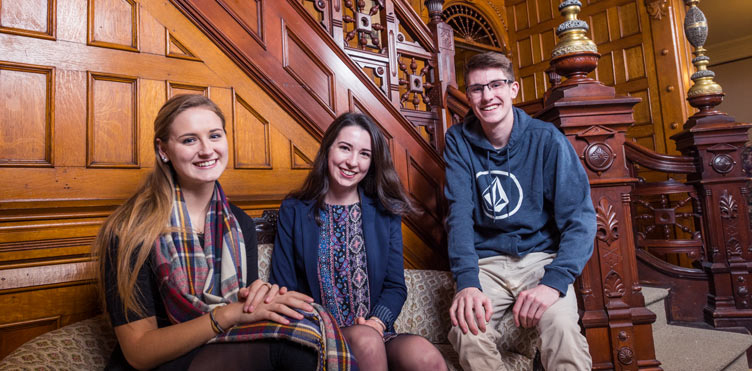
At the School of Leadership Studies, community is not an extra part of the experience. It is part of how students learn. In small cohorts, students can build close relationships with peers, faculty and staff who know them well, support their growth and challenge them to think deeply. The result is a learning environment that is both rigorous and personal, where leadership is practiced through conversation, reflection, responsibility and shared experience.
Students come here for a degree, but many leave with something more: a strong sense of belonging, lifelong friendships and a clearer understanding of how they want to contribute in the world.
A home for learning
The School of Leadership Studies is housed in a Victorian mansion at 811 Charlotte Street in Fredericton, New Brunswick. It is a lived-in, character-filled space that students often describe as feeling like a second home.
Inside the house
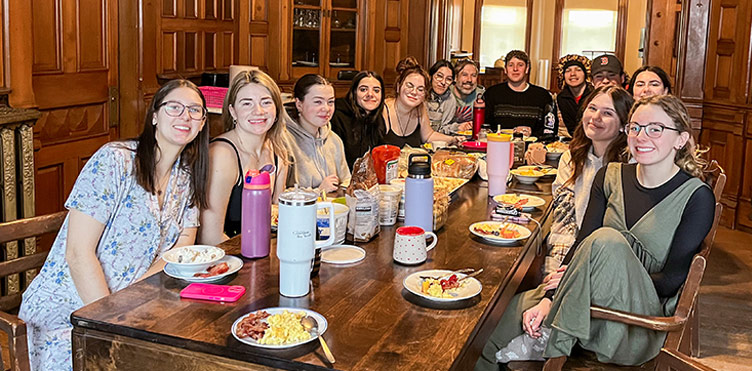
Students are encouraged to use the building throughout the day for classes, meetings, projects or downtime between activities.
The house includes:
- Two kitchens used for shared meals and community events
- Several lounge areas and nooks for studying, meeting and relaxing
- Classrooms that can also function as dining rooms or large group spaces
- Rooms for discussion circles and group work
- A dedicated meditation and prayer room for quiet reflection
- Outdoor space and a community garden that students help care for
Reconcili-action and relationship building
At the School of Leadership Studies, reconciliation is understood as an ongoing practice of listening, learning, relationship building and accountability. Indigenous perspectives and scholarship are part of coursework, but just as importantly, students are invited to think about how they gather, learn and engage with others in community.
This work is shaped by relationships with local Indigenous communities and educational organizations, including Under One Sky Friendship Centre. In recent years, students have learned through guest speakers, land-based experiences, common reads, workshops, volunteering and shared meals at community events. Rather than approaching reconciliation as a one-time initiative, the School treats it as a shared responsibility that continues to evolve through reflection, action and care.
Student leadership and involvement
Renaissance College Society (RCS)
Although the School officially changed its name in 2025, the student society continues as the Renaissance College Society, or RCS. The name carries forward a long tradition of student leadership, community spirit and connection across cohorts.
RCS members are elected by the student body and help shape student life in meaningful ways. They organize events, support cross-cohort connection, lead fundraising efforts, design school merchandise, represent students on Faculty Council and advocate for the student body as a whole. The society gives students the chance to practice leadership in ways that are collaborative, visible and rooted in service to the community.
Peer mentor program
Peer mentors are returning students who help welcome and support the incoming class. They offer practical guidance on classes and campus life, while also helping new students build relationships and feel at home in the program.
More than just a transition support, the peer mentor program reflects the culture of care that defines the School. New students are welcomed into a community where support is active, intentional and student-led.
Traditions and events
Shared traditions help shape the rhythm of the year. They create space for students to connect across cohorts, celebrate milestones and experience community in ways that go well beyond the classroom.
Orientation Camping Trip
Orientation Camping Trip
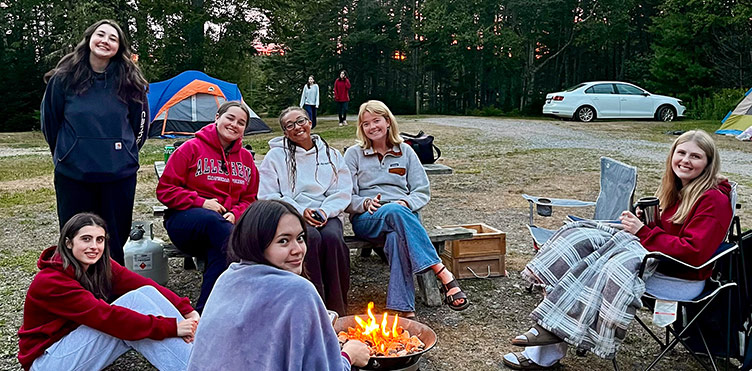
Before UNB’s campus-wide orientation begins, first-year students start their university experience on a multi-day camping trip.
Through games, hikes, campfires, shared meals and introductory learning experiences, students begin building the trust and familiarity that will carry through their degree.
It is often one of the first things students remember when they think about how the School felt different from the start.
Soup’s On
Soup’s On is one of the School’s most loved traditions. Each week, cross-cohort teams plan, purchase and prepare soup for students, faculty and staff to share together. This practice allows us to connect regularly outside of the classroom, to share life, refine ideas, and laugh together.
Student teams are required to work together to provide inclusive meals, within the confines of a set budget. The tradition builds skills in communication and accountability while offering a warm, home-cooked meal and time together.
Celebration Dinner
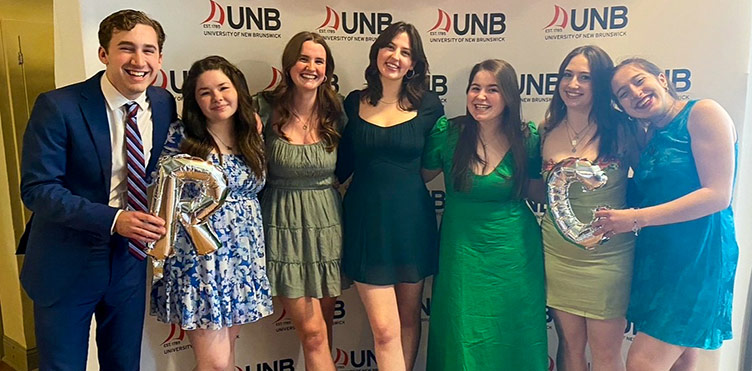
Each year, students, families and friends gather for a formal celebration dinner. With a three-course meal, live music and a keynote student speaker, the evening is a chance to honour growth, acknowledge hard work and reflect on the year as a community.
It is also an opportunity to celebrate the many talents our students bring with them, beyond what is typically seen in the classroom.
Dean’s List Tea
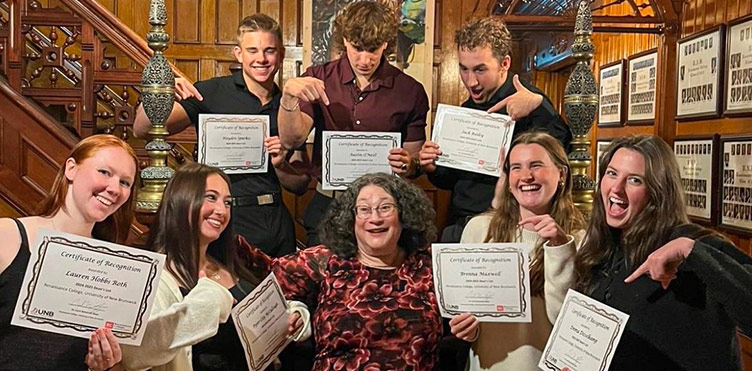
Students who achieve a GPA of 3.7 or above are invited to the annual Dean’s List Tea. Hosted by the Dean and faculty members, the event recognizes academic excellence in a setting that feels both celebratory and personal.
It reflects the School’s belief that academic depth and strong community can and should go together.
Coffee House
Each term, the Renaissance College Society hosts a Coffee House that is open to the wider UNB community. Students share music, poetry, comedy and other creative talents in a relaxed, welcoming environment.
This event offers a chance to step back from coursework, support one another and experience the creativity that runs through the School community.
Community Problem Solving end of year class trip
The Community Problem Solving course, typically taken in third year, concludes with a class trip near the end of the academic year, before exams. This trip marks a moment of transition as students prepare to graduate.
Students work with their professor to choose the destination and organize the trip, reinforcing collaboration, shared responsibility and cohort leadership. This trip usually includes time with alumni in the area, and visits to local organizations making an impact in their communities, encouraging conversations about life after SLS and career pathways.
This tradition began over twenty years ago and continues to connect students across generations of the program.
Community after graduation
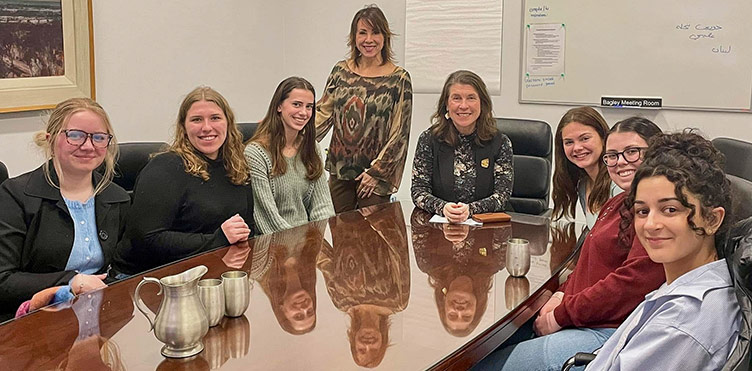
CPS class 2025 with Mayor Kate Rogers
Graduates often remain connected to one another and to the School, mentoring current students, collaborating across fields and continuing the conversations that began here.
That ongoing connection is part of what makes the program so distinctive. It is not only a place to study leadership, but a place to live it alongside others.