Understanding green buildings and infrastructure
Prefer text?
Read the transcript
What is green building?
It’s an integrative process that focuses on the relationship between the built environment and the natural environment.
Buildings can have both positive and negative impacts on their surroundings as well as the people who inhabit them everyday.
Reduce energy and water use, healthy indoor environmental quality, smart material selection, and the buildings effects on its site are key considerations of a green building.
Sound familiar? It should, as these elements mirror the different credit categories within the LEED rating system.
These buildings cause less harm and do more good, which creates a more sustainable environment for all. LEED acts a decision maker framework for the project teams during the life cycle of a building which includes planning, design, construction, and operations.
LEED rewards best practices, innovation, and recognizes exemplary performance with different levels of certification. In other words, LEED is green building.
Understanding green buildings
Green buildings play pivotal roles in fostering sustainability and curbing the negative effects that conventional buildings have on their occupants and the environment. They are designed, constructed, and operated to minimize environmental impacts and sustain occupant health and well-being. Their designs also often include different types of green infrastructure (green roofs, living walls, and more).
The need for green buildings was made clear at the end of 2021, when buildings in Canada emitted 87 mega tonnes (MT) of greenhouse gases (GHGs), accounting for approximately 11% of the nation's total emissions. These emissions contributed to fueling rising temperatures and disrupting our normal weather patterns (climate change).
Transitioning to green buildings, both in new construction and in the renovation of existing structures, emerges as a crucial strategy in aiding our fight against climate change. By integrating innovative design, efficient technologies, and sustainable materials, green buildings substantially reduce GHG emissions conventional buildings tend to generate. Besides the environmental and health benefits of green buildings, they also provide economic and social benefits.
While the process of constructing and maintaining green buildings (and green infrastructure) is complex, the benefits they yield are worthwhile. Embracing green building practices is not only a responsible choice but a fundamental step towards a sustainable future for generations to come.
Energy efficiency and conservation
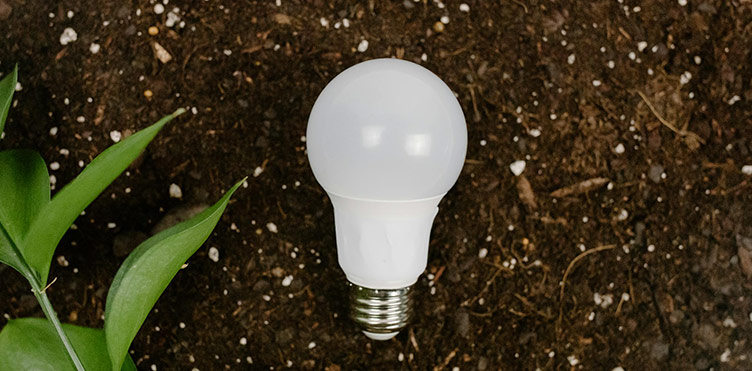
Buildings rely on various sub-systems to meet diverse needs, whether they are residential buildings, schools, offices, or restaurants. These sub-systems are essential for providing a healthy, safe and comfortable environment for occupants.
However, when energy is sourced from fossil fuels, it leads to GHG emissions. Therefore, implementing energy-efficient systems within buildings is crucial for reducing energy consumption, which in turn lowers GHG emissions and operating costs.
Energy-saving approaches
Energy usage in buildings is influenced by several factors, including the building’s size, its systems, technology efficiency, construction techniques and patterns of use. To enhance energy efficiency and promote conservation, consider the following strategies for each factor:
Building size
Optimized design: Design buildings to be as compact as possible while meeting functional requirements.
This reduces the surface area through which heat can be lost or gained, minimizing the energy needed for heating and cooling.
Efficient space utilization: Use space efficiently while designing to avoid overbuilding. Multi-functional spaces and flexible layouts can reduce the overall footprint of the building.
Efficiency of building systems and technologies
Energy-efficient lighting: Use energy-efficient lighting solutions such as LED bulbs and smart lighting controls that adjust based on occupancy and natural light availability.
Smart building technologies: Implement smart building technologies that monitor and optimize energy use in real-time.
This includes automated systems for lighting, HVAC, and other systems that adjust based on occupancy and usage patterns.
Construction methods
High-performance building envelope: Use high-performance insulation, windows, and doors to create a building envelope that minimizes heat loss in winter and heat gain in summer.
This reduces the load on heating and cooling systems.
Passive design strategies: Incorporate passive design strategies such as natural ventilation and daylighting to reduce reliance on mechanical systems.
This can include proper orientation of the building, strategic placement of windows and use of thermal mass.
Building utilization
Energy management systems: Implement energy management systems that monitor and control energy use, allowing building operators to identify inefficiencies and take corrective actions.
Maintenance and upgrades: Regular maintenance of building systems ensures they operate efficiently.
Upgrading outdated systems and technologies with more energy-efficient options can significantly reduce energy consumption.
Occupant engagement: Educate occupants about energy conservation practices and encourage behavior changes that reduce energy use.
This can include simple actions like turning off lights when not in use and setting thermostats to energy-saving settings.
Learn more about energy conservation and efficiency in homes.
Indoor environmental quality
Canadians spend an average of 90% of their time indoors — at home, work and in recreational environments. Consequently, our indoor environment significantly impacts our health, well-being, comfort and productivity. Green buildings prioritize high indoor environmental quality (IEQ) to address these concerns. They ensure good indoor air quality, mitigating issues like Sick Building Syndrome (SBS) caused by poor ventilation or indoor pollutants. Additionally, green buildings use non-toxic materials, maximize natural light, and incorporate green infrastructure, supporting mental well-being and physical activity.
Priorities for indoor environmental quality
Indoor air quality: Utilizing ventilation systems that bring in fresh outdoor air and using materials and furnishings that emit low or no volatile organic compounds (VOCs) to ensure cleaner indoor air.
Natural lighting: Designing spaces to maximize natural light reduces the need for artificial lighting, which can improve mood and productivity.
Thermal comfort: Implementing advanced heating, ventilation and air conditioning (HVAC) systems to maintain comfortable indoor temperatures year-round.
Acoustic comfort: Using sound-absorbing materials and designing layouts to reduce noise pollution, thereby creating a quieter and more comfortable environment.
Access to nature: Incorporating green infrastructure such as gardens, green roofs and indoor plants can reduce stress and enhance mental well-being.
Ergonomic design: Ensuring that furniture and equipment support good posture and reduce physical strain.
Sustainable materials and resource selection
Incorporating energy-efficient systems within a building begins with the selection of appropriate building materials and resources.
Sustainable materials and resources are those that have a low or no negative impact on the environment throughout their entire lifecycle.
Generally, green materials are those that improve sustainability by reducing the environmental impact of the building’s lifecycle.
Building materials should be:
- Durable
- Locally available
- Renewable
- Recyclable or reusable
- Salvaged whenever possible
- Have a resource efficient manufacturing process
Learn more about sustainable materials.
Sustainable site design and selection
Sustainable site planning acknowledges the characteristics of a site, analyzes its natural processes and characteristics, and respects the inherent qualities that make it special by ensuring changes made do not affect the natural integrity of the site.
Sustainable site planning considers:
- Augmenting topsoil to support plant growth and soil health.
- Managing snow to prevent accumulation and ensure safety.
- Establishing site connections to integrate with surrounding areas.
- Ensuring accessibility for all individuals.
- Providing bicycle storage to encourage sustainable transportation.
- Minimizing light pollution to protect nocturnal ecosystems.
- Integrating green infrastructure to manage stormwater to protect water resources and reduce the urban heat island effect to lower local temperatures.
- Planting native species to preserve local biodiversity.
- Implementing a comprehensive waste management plan to minimize environmental impact.
Waste management
The lifecycle of a conventional building contributes significantly to the generation of solid waste each year.
To effectively reduce the amount of waste produced by buildings, it is essential to consider their entire lifecycle, from the design phase to the end-of-life phase.
Design phase
Although it is often overlooked, the design phase plays a crucial role in waste management.
A well-designed building can significantly influence its operation and adaptability, which in turn affects its waste generation.
Designing buildings with adaptability in mind extends their useful life and reduces the likelihood of demolition, thereby minimizing the addition of waste to our solid waste stream.
Key strategies include:
- Using sustainable and recyclable materials.
- Designing for modularity and flexibility to allow for easy renovation and reuse.
- Planning for efficient material use to minimize waste during construction.
Construction phase
Effective waste management during the construction phase is essential. Proper planning and management can ensure that materials are used optimally and that recyclable materials are appropriately processed.
Key strategies include:
- Implementing a waste management plan to track and manage waste.
- Using prefabricated components to reduce onsite waste.
- Sorting and recycling construction waste to minimize landfill contributions.
Operational phase
During the building’s operational phase, ongoing waste management is crucial. Ensuring that waste segregation and disposal processes are straightforward and well-known to all occupants can significantly reduce waste.
Key strategies include:
- Providing easily accessible waste receptacles for different types of waste (e.g., recyclables, compost, general waste).
- Clearly labeling receptacles and placing signage to educate occupants on proper waste disposal.
- Regularly monitoring and recording waste production to identify areas for improvement.
End-of-life phase
The end-of-life phase of a building is critical in managing waste. Proper planning for this phase can ensure that materials are reused or recycled, rather than contributing to landfill waste.
Key strategies include:
- Conducting a thorough assessment to determine which materials can be salvaged and reused.
- Implementing deconstruction practices rather than demolition to maximize material recovery.
- Partnering with recycling facilities to process materials that cannot be reused.
By considering waste management throughout the entire lifecycle of a building, from design to end-of-life, we can significantly reduce the environmental impact and contribute to a more sustainable future.
Water conservation and efficiency
Effective water management is a vital component of green buildings and several types of green infrastructure.
Water conservation involves strategies that reduce water use, loss, or waste.
In contrast, water efficiency focuses on accomplishing tasks with the minimal amount of water necessary.
Key strategies include:
- Installing low-flow fixtures: These fixtures, such as faucets, showerheads, and toilets, significantly reduce water usage without compromising performance.
- Implementing green infrastructure such as rainwater harvesting systems: Collecting and storing rainwater for later use can significantly cut down on the reliance on municipal water supplies.
- Using native and drought-tolerant landscaping: Selecting plants that are adapted to the local climate reduces the need for irrigation, thereby conserving water.
Understanding green infrastructure
Green infrastructure refers to the strategically planned network of natural and semi-natural areas, along with engineered systems and green technologies, that collectively provide a multitude of economic, environmental, health, and social benefits. By combining vegetative systems with built features, green infrastructure emulates natural processes to manage water and create healthier urban environments.
As you might have noticed while learning about green buildings, green infrastructure can be a part of green buildings (green roofs, living walls, and more), but it can also be outdoors, connected to them or completely separate from them. Explore some of the different types of green infrastructure below.
Green infrastructure examples
Living walls
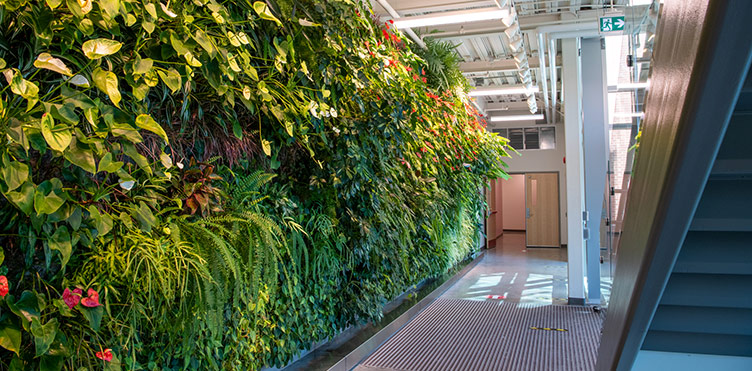
Living walls (as called green walls) are vertical structures that have been covered in vegetation.
Living walls (like the one in UNB Fredericton’s Kinesiology Building) are great for improving air quality, reducing noise and increasing the aesthetic appeal of a space.
Green roofs
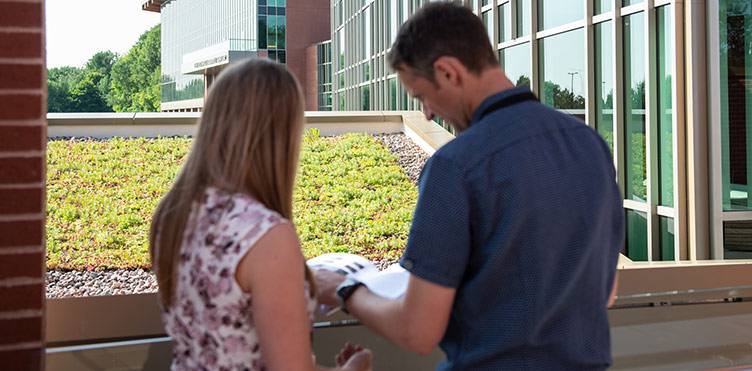
Green roofs are contained areas of vegetation that have been planted on the roofs of buildings.
Many green roofs (like the one on UNB Fredericton’s Kinesiology Building) contain small plants and grasses, but some contain larger plants such as shrubs and trees.
There are different types of green roofs, but all of them typically consist of a water-proofing and root repellent system, a drainage system, a filter cloth, a lightweight growing medium and of course, plants.
Urban forests and woodlots
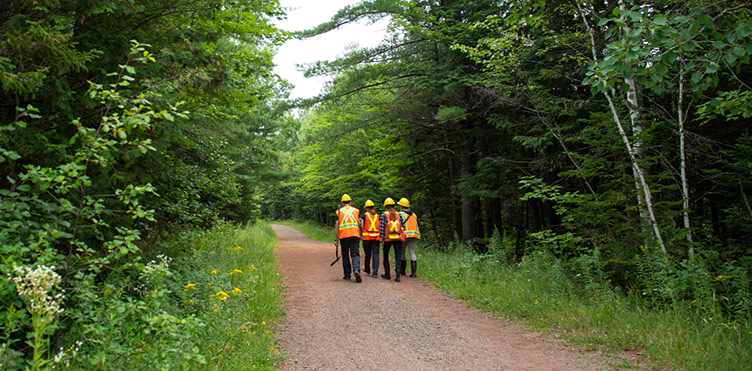
Urban forests and woodlots are dynamic systems filled with trees, shrubs and green space, as well as with soil and water that support them.
Urban forests and woodlots provide lots of oxygen, clean air, shade and habitat for local wildlife.
Bioswales, permeable pavement and rain gardens
Bioswales, permeable pavement and rain gardens are all examples of Low Impact Development (LID).
LID is green infrastructure, but green infrastructure that is specifically for managing stormwater runoff.
LID intercepts, absorbs and holds stormwater, which helps reduce the amount of stormwater runoff flowing into storm sewers and then nearby bodies of water during rain events.
Urban agriculture
Food growing activities in and around urban areas are referred to as urban agriculture.
Examples of urban agriculture include community gardens, orchards, greenhouses and rooftop farms.
UNB Fredericton’s community garden is located just behind the Neville Homestead (58 Mackay Drive), and UNB Saint John’s community garden is located outside of the Jeux Canada Games Stadium.
Check your understanding
This work is licensed under a Creative Commons Attribution-NonCommercial 4.0 International License.