David Black
Honorary Research Professor
Enterprise 1, Rm. 006
Fredericton
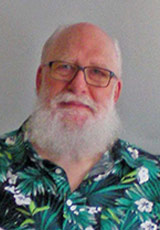
Dr. David Black taught archaeology at UNB for 25 years and has conducted archaeological research in the Canadian Maritimes for 45 years. His academic interests include prehistoric archaeology, geoarchaeology, structural and stratigraphic analyses of coastal shell-bearing sites, and the zooarchaeology and human ecology of hunter-gatherer-fishers adapted to marine shorelines. Dr. Black’s master’s and doctoral research projects involved excavations of coastal sites on islands at the mouth of Passamaquoddy Bay. He has been involved in archaeology projects on the Grand Manan Archipelago, and on Deer Island, the Letang Islands, Partridge Island, the Bliss Islands and the mainland shores of the Quoddy Region, all parts of the traditional territory of the Peskotomuhkatiyik (Passamaquoddy people). In addition to his research on pre-contact sites, Dr. Black excavated an early Loyalist period historic site, the homestead of Lieutenant Samuel Bliss and family—on the Bliss Islands.
Since 1991, Dr. Black and his students and colleagues have been conducting research into how Indigenous people acquired and used local and exotic lithic materials to make stone tools. One focus of this work has centered on the Washademoak Lake Chert Source located in the traditional territory of the Wolastoqiyik (Maliseet people), another on archaeological assemblages from the Quoddy Region. The aim of this research is to use archaeological distributions of distinctive lithic materials from known sources as proxy data for documenting Indigenous exchange and interaction systems before European contact, and for understanding how and why these patterns changed through time.
Dr. Black was invited by the Confederacy of Mainland Mi’kmaq in Truro, Nova Scotia, to contribute a chapter on lithic material research to a book that the Confederacy published on the research potential of the Debert Paleoamerican site complex in Mi’kma’ki (Micmac traditional territory). He also collaborated with the E’se’get Archaeology Project conducted by Dr. Matthew Betts (Canadian Museum of History) at Port Joli, Nova Scotia.
In 2006–2007, the George Frederick Clarke Artifact Collection, one of the largest and best documented avocational archaeology collections in New Brunswick, was donated to UNB by the family of Dr. G.F. Clarke. Dr. Black and colleagues have developed this collection, comprised of 2700 pieces of material culture and associated notes and records, for research, teaching, display and public outreach activities. Dr. Black contributed artifact descriptions and an afterword to the fourth edition of G.F. Clarke’s book, Someone Before Us.
Since retiring from teaching in 2016, Dr. Black has continued publishing on coastal archaeology, including a monograph on intertidal assemblages from the Quoddy Region and chapters on lithic materials from the Bliss Islands sites and sea mammal remains in the Maritimes archaeological record. He also contributed to a paper on the zooarchaeology of green sea urchins. In addition, he has continued his collaborations with avocational artifact collections, publishing a paper on an Archaic period cache from the interior of Peskotomuhkati traditional territory and contributing to a poster on Late Archaic period artifacts from central New Brunswick.
In 2023, Dr. Black received the Smith–Wintemberg Award from the Canadian Archaeological Association.
Selected publications A Biface from Bob's Beach
Dr. Black's 2004 monograph, Living Close to the Ledge: Prehistoric Human Ecology of the Bliss Islands is available by request. Please email Dr. Black directly to obtain a copy.
Video lectures
- Black, D. W., and C. A. Woolsey 2007. The Northeast Point Site
- Black, D. W. 2014. Coastal Erosion and Archaeological History in Charlotte County, New Brunswick
-
Black, D. W. 2019. A History of Archaeology in Charlotte County, New Brunswick Part 1 | Part 2
Online publications
- Pintlowes Cove Projectile Point
- The Cape Enrage Figurine
- A Gouge from Indian Island
- KTMP Artifacts from Maugerville
- The Upsalquitch Harpoon