Maryam Kebbe
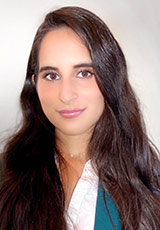
Associate Professor
PhD
KIN 305
Fredericton
Research interests
- Nutrition and physical activity
- Maternal and infant health
- Breastmilk and microbiome
- Obesity and metabolic diseases
Current teaching
- KIN 3481 Nutrition for Healthy Living
- KIN 4481 Exercise & Sport Nutrition
- KIN 4482 Maternal & Child Health
Biography
Dr. Maryam Kebbe received her Bachelor’s degree from the University of Ottawa. She received her Master’s and Doctorate in Medical Sciences from the University of Alberta’s Department of Pediatrics. She then completed postdoctoral training in the Medical Sciences Division at the University of Oxford, followed by the Reproductive Endocrinology and Women's Health Laboratory at the Pennington Biomedical Research Center in Louisiana. Dr. Kebbe is an Associate Professor in the Faculty of Kinesiology at the UNB, where she directs the Perinatal-Pediatric Health & Development Studies (PEADS) Laboratory.
Dr. Kebbe’s research program investigates the connections between early life nutrition, physical activity, metabolism, and the gut microbiome, aiming to enhance metabolic health and prevent obesity in early life. Alongside receiving around 5 million in provincial and national awards, she has led over 60 peer-reviewed publications in high-impact journals, 150 presentations, and 50 media communications or knowledge translation activities. She also developed, in partnership with industry, the first neonatal and infant metabolic chamber in Canada, enabling novel, direct measurement of infant energy metabolism. Most recently, she was recognized as one of Atlantic Canada’s 25 Most Powerful Women in Business for 2025. She also founded the HiPPP Canadian Collective, offering training workshops and seminars to students and early- and mid-career researchers in pregnancy and postpartum health.
Research projects
- Prenatal and postnatal determinants of intergenerational obesity and diabetes, including prevention and management of gestational diabetes mellitus
- Modifiable factors (e.g., diet and physical activity) influencing human milk, the gut microbiome and metabolites, body composition, and metabolic health across pregnancy, infancy, and toddlerhood
- Sports nutrition and metabolic performance