Undergraduate programs in nursing and health sciences
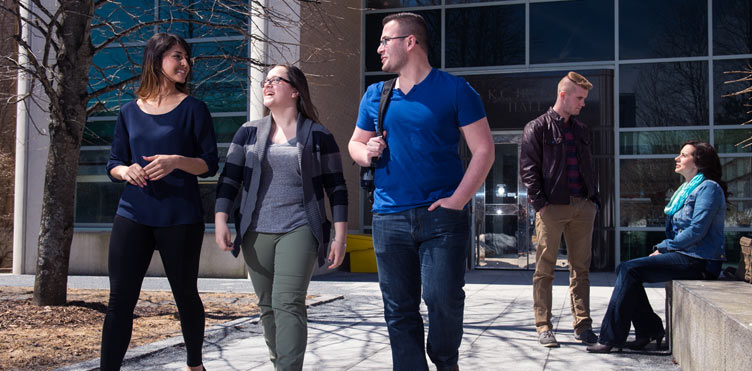
The science of care. The art of healing.
With programs that focus on nursing, radiography, and respiratory therapy, UNB Saint John brings your degree to life through a blend of academic excellence and superior professional healthcare experiences.
Saint John Regional Hospital (SJRH) is the largest healthcare facility and teaching hospital in New Brunswick and is the home to the province’s main trauma and heart care centre. This incredible learning facility is within walking distance of UNB’s Saint John campus and serves as our primary site for clinical education.
Our other partners include the Moncton Hospital and numerous local institutional and community health agencies to provide care experiences for our students.
Your education in our partnered facilities will give you valuable real-world experiences including opportunities to learn at the province’s main trauma and heart care centre. From the intricate work of surgical units, to the advanced technology of imaging suites, to daily care offered to patients in a variety of health care units, UNB Saint John will help you achieve your professional goals.
Programs
Bachelor of Nursing (4-year program)
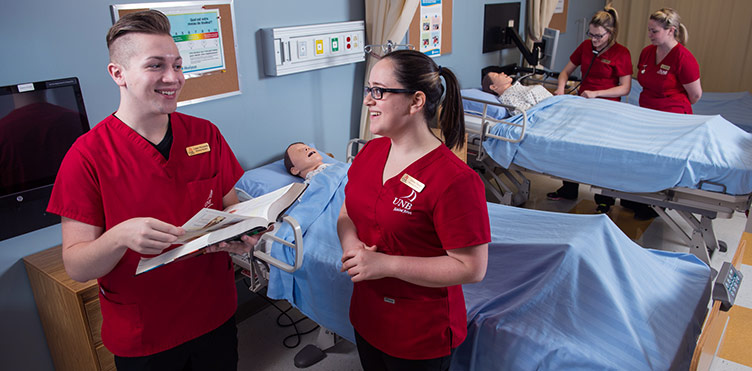
UNB Saint John offers you a choice between two bachelor of nursing degree options: The 4-year and the 3-year programs. The 4-year option is our more traditional delivery model.
The courses in the 4-year program occur in Fall and Winter terms with only one month of summer term being used for concentrated clinical in year 2. Graduation occurs at the end of your fourth year, when successful in the program.
What to expect
During this program, you will follow a continuum of learning. The early portion of the program introduces the profession of nursing and emphasizes health promotion and disease prevention. In the winter term, you will engage in a wellness-focused clinical practice.
As you advance to the midpoint of the degree, the focus will shift to supportive care in areas of chronic and mental health challenges. You will also focus on health promotion and preventative care during the childrearing years.
You will proceed to acute care issues, community development and population health and practice with individuals and families. You will learn to identify, critique, synthesize, and integrate evidence into practice.
Your final terms focus on leadership, theory, and practice in health policy. During your final term, you will engage in a concentrated clinical experience (preceptorship) that is coordinated between UNB and our professional clinical partners.
Note: Students cannot transfer between the 4-year and 3-year programs – so it is very important that you take the time to consider your skills, abilities, and preferences before you commit to your chosen program.
For more information on the Nursing program at the Saint John campus, contact nursingsj@unb.ca.
Bachelor of Nursing (3-year program)
UNB Saint John offers you a choice between two bachelor of nursing degree options: The 4-year and the 3-year programs.
The 3-year option is our newest delivery model and utilizes all three terms in the academic year - Fall, Winter and Summer terms and allows a break from the program in the month of August. Graduation occurs at the end of your third year, when successful in the program.
What to expect
During this program, you will follow a continuum of learning. The early portion of the program introduces the profession of nursing and emphasizes health promotion and disease prevention. In the winter term, you will engage in a wellness-focused clinical practice.
As you advance to the midpoint of the degree, the focus will shift to supportive care in areas of chronic and mental health challenges. You will also focus on health promotion and preventative care during the childrearing years.
You will proceed to acute care issues, community development and population health and practice with individuals and families. You will learn to identify, critique, synthesize, and integrate evidence into practice.
Your final terms focus on leadership, theory, and practice in health policy. During your final term, you will engage in a concentrated clinical experience (preceptorship) that is coordinated between UNB and our professional clinical partners.
Note: Students cannot transfer between the 4-year and 3-year programs – so it is very important that you take the time to consider your skills, abilities, and preferences before you commit to your chosen program.
For more information on the Nursing program at the Saint John campus, contact nursingsj@unb.ca.
LPN to BN Bridge
The LPN Bridge program allows licensed LPNs to build on their LPN education and experience to advance to a Bachelor of Nursing degree. In this program, you will complete six identified “bridge” courses at UNB Saint John. With the successful completion of these courses, you are then eligible to move into the third and then fourth year of the UNB Saint John Bachelor of Nursing degree program to complete your BN degree in an additional 2 years.
UNB Saint John enrolls successful applicants to the LPN Bridge Program yearly, in the fall.
For more information on LPN Bridge contact nursingsj@unb.ca.
Bachelor of Health Sciences
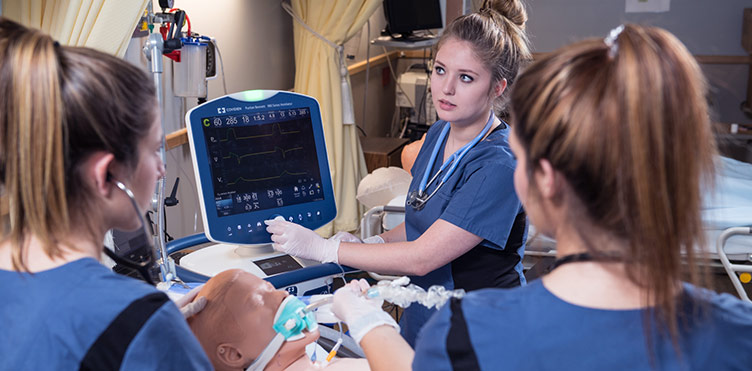
One degree, two choices
Now is a great time to consider a career in one of the two medical fields of health sciences. There is great demand across the country for health care professionals and recruiters visit UNB Saint John throughout the year to help students explore their career options. A choice of job opportunities awaits you as a graduate of our Health Sciences program.
The Bachelor of Health Sciences (BHS) is divided into two distinct streams:
Radiography
Radiological technologists are experts in the use of electromagnetic radiation, such as X-rays, for the diagnosis of injury and disease. Most Canadians will benefit from the work and care of a radiological technologist in their lifetime from common injuries such as sprains and broken bones to the preventative care of an annual mammogram.
For more information about the profession, see the Canadian Association of Medical Radiation Technologists (CAMRT).
Respiratory therapy
Respiratory therapists help people breathe. From emergency care for premature babies with immature lungs, to ongoing treatment for people with chronic diseases such as cystic fibrosis, asthma and emphysema, respiratory therapists play an important role in lifelong health.
Respiratory therapists can be found throughout the health care system, such as hospitals, rehabilitation centres, public health clinics, home care services, research labs within universities and private sector corporations, equipment and pharmaceutical sales and air quality testing facilities.
A respiratory therapy degree can also open doors around the world. Health care providers in developing countries actively recruit Canadian graduates to help develop health care facilities and programs abroad.
Following completion of the BHS (Respiratory Therapy) students may pursue further training in the specialized treatment areas of perfusion technology, sleep medicine, neonatal or pediatric care and anaesthesia assistant.
Respiratory Therapy is offered in collaboration with the New Brunswick Community College Saint John Campus.
For more information about the profession, see the Canadian Society of Respiratory Therapists.
Contact us at nursingsj@unb.ca if you have any questions.
Respiratory Therapy Post Diploma Entry
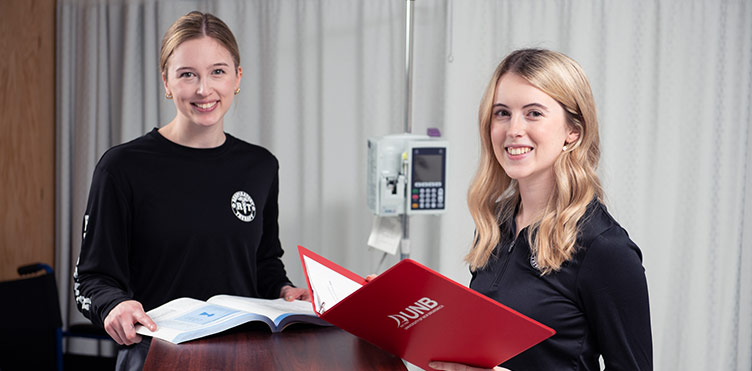
Respiratory Therapists (RT) will be able to gain access to the Post Diploma Entry to Bachelor of Health Sciences. Eligible students require successful completion of High School MATH 112 with a minimum grade of 60% and provide proof of current registration with the New Brunswick Association of Respiratory Therapists (NBART) in good standing. The Admission Policy on English Language Proficiency as described above applies to the Post Diploma Entry to BHS.
Program duration
- Equivalent to 2 years of full-time university study (60 credit hours).
- Available on a full-time or part-time basis.
- Must be completed within five years of registration of the first course.
- Courses may be completed in the sequence best suited for you; however, attention must be paid to course pre-requisites.
Delivery mode
The program has been designed to provide you with flexibility in your options for degree completion.
- Required courses will be offered annually online term-based.
- Elective courses will be offered on alternate years online term-based and available through the College of Extended Learning (C.E.L).
- Equivalent in-person courses are available.
- You can apply for transfer of previously completed credits.
You are advised to consult with our Program Coordinator in the Department of Nursing and Health Sciences for academic advising regarding the program course offerings and availability of courses.
Admission requirements
- Licensed as a respiratory therapist and in good standing with the New Brunswick Association of Respiratory Therapists (NBART).
- Must adhere to UNB’s admission policy on English language proficiency.