Courses / Workshops

Workshops are being planned for Sunday May 31st, 2009 (1 day)

They begin at 8:30am and end near 5pm.

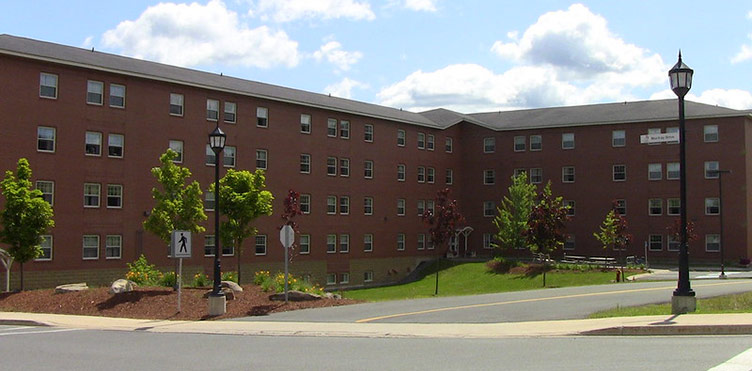
All are held at UNB in Tilley Hall.

$50 registration fee (with light lunch & morning and afternoon coffee break is included)

Isotope Applications in Mineral Exploration and Environmental Management (Rm. T303)

Presenters: Bruce Eglington (Organizer)(Univ. Saskatchewan), Rob Creaser (Univ. of Alberta), Larry Heaman (Univ. of Alberta), Mike Villeneuve (GSC, Ottawa), and Kurt Kyser (Queens Univ.)

The course plans to include; 1) Introduction to isotopes (radiogenic and stable; terminology; simple overview of measurement techniques), 2. Radiogenic isotopes, dating, initial ratios, epsilon/gamma values, 3) U-Pb dating, 4) Ar-Ar dating, 5) Statistics of dating calculations (assessing what is good or not so good), 6) Introduction to fluid-rock interaction, 7) Light stable isotope applications (mainly O, H; maybe some S), 8) Re-Os applications, 9) U-Th-Pb, and 10) Non-traditional isotope systems (Cu, Zn, Fe, Mo, Cr), and 11) selected case studies.

Indicator Mineral Exploration Technology (Rm. T104)

Presenters: Harvey Thorleifson(Univ. Minnesota & Minnesota Geological Survey, Organizer) and Beth McClenaghan (GSC, Ottawa, Organizer), and 8 others.

This one-day workshop will review principles, methods, and developments in indicator mineral methods. Since playing a key role in the discovery of the Lac de Gras diamond field, indicator mineral methods have risen in prominence. These mineral exploration methods rely on sampling of sediments such as glacial and stream sediments, and detection of mineral deposit indicators dispersed by mechanical processes. The workshop will address how indicator mineral methods are part of a spectrum of clastic sediment-based methods that ranges from boulder tracing to detection of detrital debris or their weathering products by chemical analysis of C-horizon soils and sediments. Whereas the panning for gold grains has long been known, the search for kimberlite indicator minerals has only become widely familiar over the past two decades. The scope of indicator mineral methods has broadened to a full array of mineral deposits, including base metals and uranium. The workshop will consist of presentations by some of the most experienced practitioners in the field. Topics include; 1) Principles of clastic sediment transport, 2) Indicator mineral survey design, 3) Sampling & sample processing, 4) Mineral chemistry methods, 5) Quality assurance, 6) Regional, multiple commodity surveys, and 7) Presentations on specific indicators and commodities, including Au, Ni-Cu-PGE, kimberlite, gahnite, IOCG, and porphyry Cu.

Uranium Deposits: Genetic Geochemical Models to Prospect-scale Geochemical Exploration Technologies (Rm. T304)

Presenters: Irvine R. Annesley (JNR Resources Inc.), Ken Wheatley (Forum Uranium Corp.), Alistair J. McCready (Hathor Exploration Limited), Dave Lentz (Univ. of New Brunswick), and Sam Romberger (Colorado School of Mines)

Since the international conference of Uranium Geochemistry 2003 in Nancy, France, major advances have taken place in uranium geochemistry, coincident with the current extraordinary exploration boom. These advances have been made in applied mineral exploration research because of new ideas and technologies, which have allowed researchers to quantify models for all types of deposits, including uranium. The purpose of this workshop is to highlight the new geochemical data and research that has been developed over the last 10 years and integrated into prospect-scale geochemical exploration technologies for uranium. The workshop will start with presentations on the genetic geochemical models for the major types of uranium deposits, followed by new geochemical exploration technologies/tools and refined/new strategies for uranium exploration.